
Climate change and global warming have pushed planet earth on the edge of a perilous condition. While peak temperatures have broken new records across different parts of the world including India during the past three consecutive years, there has been no let-up in greenhouse gas emissions (GHG), which according to the EDGAR emission database reached a staggering 53.4 GtCO2e in 2024. The latest UNEP report predicts that even when all net-zero emission pledges are fulfilled and unconditional NDCs (nationally determined contributions) are fully implemented, the estimated global warming temperature is likely to drift between 2-30C, which is much higher than the 1.5-20C target as agreed upon under the Paris Agreement signed by 195 countries in 2015.
The powerful changes in the weather patterns witnessed worldwide in recent years have led to extreme events such as unprecedented floods, intense droughts, heat waves, melting of glaciers, rise in sea levels and warming of oceans. With 25 out of the 35 vital planetary parameters already at record levels, the climate scientists have repeatedly warned us that we are already in a midst of a climate emergency! Further, the so-called El Niño phenomena slated to occur this year could be the strongest weather event of the century, that may trigger widespread devastation.
While the twin threats of climate emergency and El Niño continue to loom large, a tiny ray of hope emerged amongst the otherwise grim climate scenario. The Global Electricity Review report-2026 by Ember – the Global Energy Think Tank – revealed that the speedy growth in renewable energy has arrested the rise in the generation of fossil-fuel-based energy. Renewable sources contributed 33.8% of the global electricity generation in 2025, overtaking coal-based energy generation (33%) for the first time! This is indeed a welcome and encouraging development, indicating that the global community has responded responsibly to the urgent need for abatement of climate change and global warming. Incidentally, it is indeed remarkable that India has achieved the distinction of exceeding the 50% mark for renewables. The data on Power Sector at a Glance from the Ministry of Power shows that as on March 31st, 2026, the contribution of non-fossil-fuel-based energy in India stood at 53.2% of India’s total installed electricity capacity.
The building and construction sectors account for 34% of the total energy used globally and are responsible for 37% of carbon emissions. The Energy Statistics India-2025 report from the Ministry of Statistics and Programme Implementation reveals that the share of the domestic consumption sector in India is 24% of the total electricity consumption. If the energy consumption requirement of the construction sector is added to this, the combined share of domestic (building) and construction sectors may be of the order of around 30%, which is closer to the global estimate.
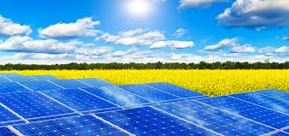
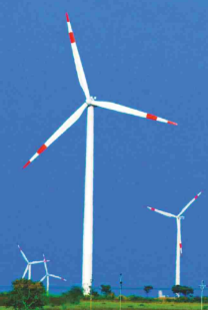
Fig 1. Solar Farm and Windmill (Source:Google Photos)
India is one of the fastest growing economies in the world. The rapid urbanization happening currently on the one hand and India’s aspiration to achieve the ‘Viksit Bharat’ (developed nation) status by 2047 on the other, are expected to trigger an enormous surge in housing and infrastructure demands. This, in turn, will significantly increase construction activities, which may lead to an increase in carbon emissions too. While rapid economic development is essential for India’s long-term growth trajectory, it also augurs well for the construction industry. Simultaneously, it places a major responsibility of reducing carbon emissions from the built environment on the industry.
Need to Reduce Embodied Carbon
The World Green Building Congress broadly categorizes carbon emissions into two main classes, namely ‘operational carbon’ and ‘embodied carbon’. As discussed earlier, the global focus on reducing carbon emissions by using renewable energy – mainly wind and solar (see Fig. 1) – has been helpful in reducing the ‘operational’ carbon, that is, emissions resulting from energy consumed for heating, cooling, ventilation, lighting systems, operations of equipment, etc. However, comparatively less attention has been given to reducing the ‘embodied’ carbon, which arises during manufacturing, transportation, construction, repair, maintenance, refurbishment, etc. of buildings and infrastructure (see Fig. 2).
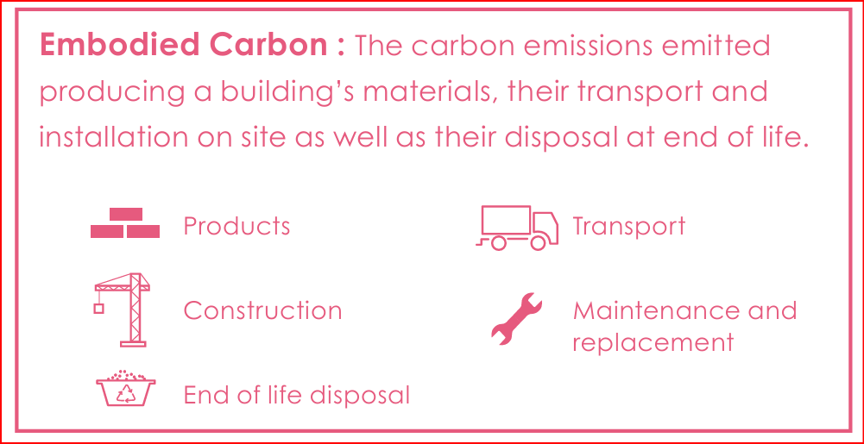
Fig 2. What is Embodied Carbon ? (Source: www.leti.london)
The Global Alliance for Buildings and Construction has predicted that global material consumption is expected to nearly double by 2060, and the embodied carbon share is estimated to increase from 25% in 2021 to 49% in 2060! While similar India-specific data is not available, the rapid urbanization trend suggests a comparable trajectory. The International Energy Agency (IEA) estimated that an additional 270 million people are expected to be added to India’s urban population from 2020 to 2040, requiring an extra 30 billion m2 of residential floor space.
Let’s consider the cement and concrete sectors. With 30 billion tonnes of concrete produced annually worldwide, this ubiquitous material happens to be the largest man-made material on the earth. Therefore, it would be appropriate to reduce the embodied carbon from concrete on priority.
Recently, the Global Cement & Concrete Association-India (GCCA-India), jointly with The Energy Research Institute of India (TERI), published a roadmap for the decarbonization of the cement and concrete sectors. This roadmap aligns itself with the objectives of Viksit Bharat-2047 and India’s commitment to net zero by 2070. For predicting future cement demand in India, the roadmap assumes reasonable compound annual growth rates (CAGRs) varying from 6% during 2020-30, 4.5% during 2030-47, and 2.3% during 2047-70. Such growth is inevitable for a developing country striving to achieve developed nation status.
The GCCA-India-TERI roadmap identifies eight decarbonization levers such as improving clinker efficiency, use of alternative fuels, increased use of supplementary cementitious materials, decarbonization of electricity, new binders, re-carbonization, cement use efficiency, and advanced technology like Carbon Capture, Utilization and Storage (CCUS). Since the CCUS technology is in its infancy, its large-scale adoption is expected by the middle of this century.
Improved Efficiency in the Use of Cement is Essential
The roadmap observes that the largest potential to reduce embodied carbon (30.2%) lies in cement-use efficiency. There exists a deep-seated misconception in certain sections in India that the use of excess cement results in providing stronger structures! This belief is technically incorrect. There is a plethora of research which shows that the use of an excess amount of cement can, in fact, be harmful as it produces additional heat of hydration, leading to possible cracking that has adverse effects on the long-term durability of structures. Therefore, reducing the embodied carbon through the ‘cement-use efficiency’ route would not only be one of the most cost-effective pathways of decarbonization but also a crucial means of conserving non-renewable natural resources.
It is encouraging that many leading builders, developers, and medium-to-large construction companies have started improving material-use efficiencies and evaluating the embodied carbon in their new projects. However, a large section of construction professionals has not yet fully realized the beneficial potential of such practices.
Recognising the urgent need of providing guidance to construction professionals in evaluating embodied carbon and optimising material resources, the Low Carbon Construct Forum (LCCF), jointly with GCCA-India, conducted a detailed pilot study on the Comparative Evaluation of Embodied Carbon for High-rise and Low-rise Buildings in India and a publication on the same is now freely available. The study examined multiple alternative designs for both high-rise and low-rise buildings. It highlighted the importance of innovative architectural and structural designs that minimize material consumption, particularly energy-intensive materials like steel and cement, through optimization approaches. One of the significant findings of the study was that the design alternative with the lowest carbon emissions emerged as the lowest cost option!
In any new construction project, the process begins with collaboration among architects, structural engineers, and other service providers. While the architect focuses on passive architectural design strategies and the use of energy-efficient features, the structural engineer ensures compliance with prescribed standards relating to strength, serviceability, durability, robustness, and integrity of the structures. Typically, multiple design alternatives with estimated project costs are presented to the owner or client. It is at this stage that architects and structural engineers should also evaluate the embodied carbon of each alternative and, while presenting it to the owners/clients strongly advocate adoption of the option having the least embodied carbon. Experience from different parts of the world increasingly suggests that when both structurally efficient and material-efficient design approaches are adopted, the option with the lowest embodied carbon also tends to be the most economical.
To facilitate easier assessment of embodied carbon based on concrete mix design data, several professional and private organizations from different parts of the world provide web-based calculator tools. A simple web-based calculator tool has also recently been developed by LCCF and is presently available to users in India on a pilot basis through a nominal subscription model. The LCCF tool presently caters to the limited application of evaluating the embodied carbon of different concrete mixes of grades from M10 to M100. Once the benchmark values of the embodied carbon of these grades become available, measurable annual reduction targets can be established.
As the threats of climate change and global warming are intensifying, all professional stakeholders in the construction sector need to make commitments to evaluate and progressively reduce embodied carbon emissions from all new construction projects. A few stakeholders from the construction sector have already made such commitments. It would therefore be a good idea if other stakeholders make a voluntary commitment to achieve net zero embodied carbon by a target year of their choice ranging from 2040 to 2070. Such commitments can serve as strong moral and professional obligations.
Nearly one-fourth to one-third of India’s total energy production is consumed by the building and construction sectors. At a time when energy demand is rapidly increasing owing to developmental needs in the country, voluntary reduction in embodied carbon by construction professionals contributes to substantial energy savings. Such efforts would therefore be both climate-friendly and nationally beneficial.
On the eve of World Environment Day, we salute those architects, engineers, and builders who have made commitments to net zero and have already started the exercise of reducing embodied carbon from the projects they are involved with.
cement & concrete